
Why Your Hotel Loses Bookings Without a Website, CRM, and Automation
Discover how the absence of a modern website, CRM system, and automation leads to lost bookings, slow responses, dependence on OTAs, and reduced repeat reservations. Learn how to regain control over sales and increase room occupancy.
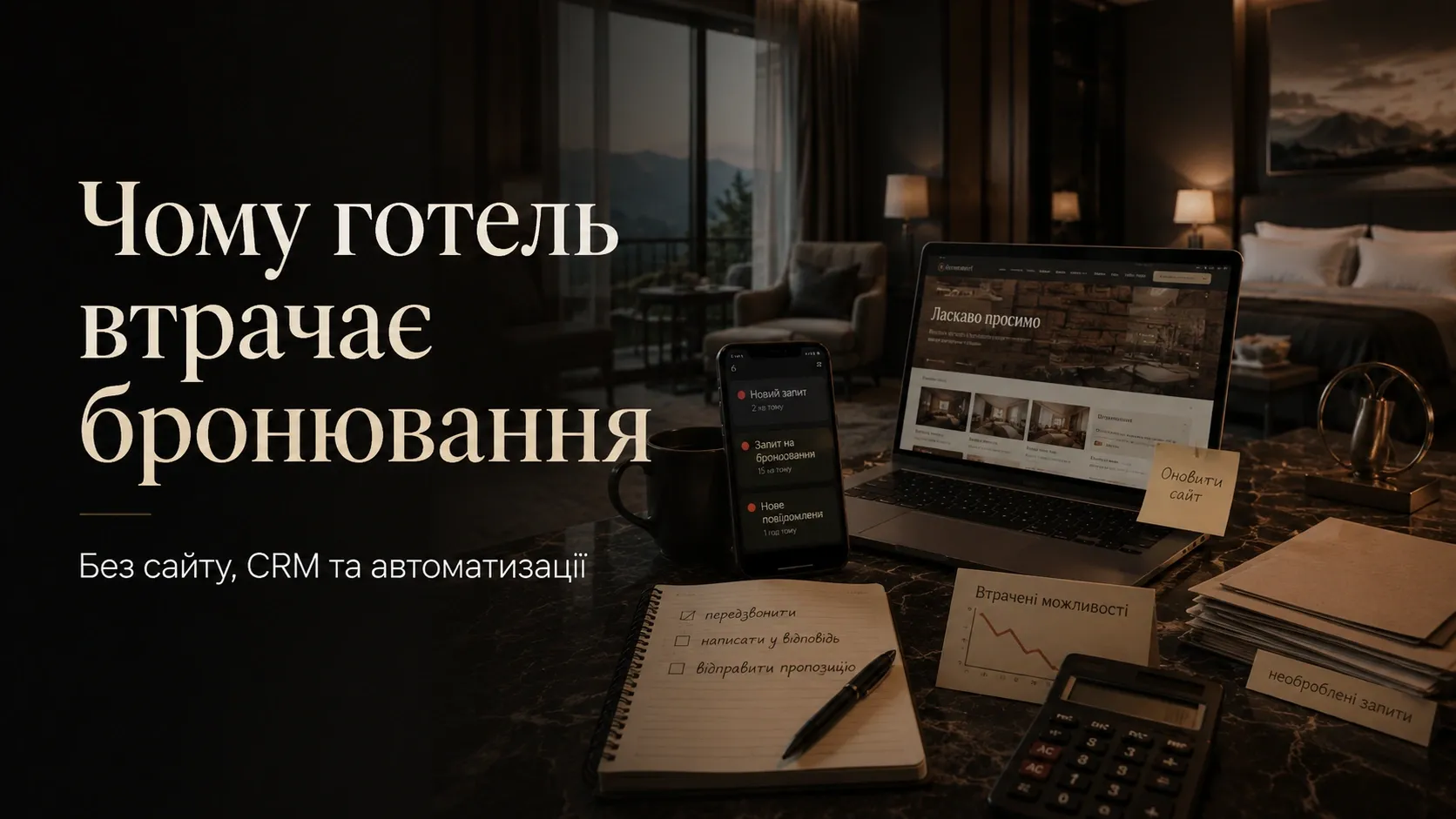
Every hotel owner has faced a situation where a potential guest reaches out via messenger, calls, or leaves a request on a platform, but the booking never happens. The reasons can vary: slow responses, an inconvenient booking process, lack of online payment options, or simply a lost request in the chaos of manual tracking. In this article, we’ll explore how the absence of a modern website, CRM system, and automation directly impacts a hotel’s revenue and which tools can help regain control over sales.
How Hotels Lose Bookings: Key Problems
1. Lost Requests Due to Slow Responses
Imagine this scenario: A guest finds your hotel on Booking.com but wants to clarify details or get a discount. They message you on Instagram or Viber, and the response takes hours. In 2024, guests aren’t willing to wait—they choose the hotel that responds faster.
Consequences:
- Up to 30% of potential guests abandon bookings if they don’t receive a response within 15-30 minutes.
- Slow communication creates an impression of inefficient service, reducing trust in the hotel.
- Without a CRM system, requests get lost in the flood of messages, calls, and emails.
Example: A hotel in the Carpathians receives 50 requests daily through various channels. Without automation, staff spend hours manually processing each request, leading to delays in responses and lost bookings.
2. Weak Website or No Website at All
Many small hotels rely solely on platforms like Booking.com or Airbnb, lacking their own website. This leads to several issues:
- Dependence on OTAs: Commissions for bookings through online travel agencies (OTAs) can reach 15-30% of the room price, significantly reducing the hotel’s margin.
- Lack of Direct Bookings: Guests who book through OTAs rarely return directly, making it harder to build loyalty and repeat sales.
- Limited Brand Control: On OTA platforms, your hotel competes with dozens of other options, and you can’t fully showcase your advantages.
Why a Website is Essential:
- Online Booking: A modern website with an integrated booking system allows guests to independently choose rooms, dates, and pay for bookings 24/7.
- SEO and Organic Traffic: A well-optimized website attracts clients through search engines, reducing dependence on paid channels.
- Full Data Control: You collect guest contacts for future communications and marketing campaigns.
3. Manual Tracking and Process Chaos
Without a CRM or PMS (Property Management System), hotels are forced to track bookings in Excel spreadsheets or even on paper. This leads to:
- Booking Errors: Double bookings, lost requests, or incorrect dates create a negative experience for guests.
- Lack of Analytics: Without a centralized system, it’s difficult to track room occupancy, revenue, and the effectiveness of marketing campaigns.
- Scaling Difficulties: If the hotel expands or opens new branches, manual tracking becomes unmanageable.
Example: A 50-room hotel receives bookings via phone, messengers, and OTAs. Without a CRM, each request is processed manually, leading to booking errors and dissatisfied customers.
4. Lack of Repeat Sales
Repeat bookings are the cheapest way to increase a hotel’s revenue. However, without a CRM and automation, it’s difficult to:
- Track Interaction History: Without a centralized database, it’s impossible to see which guests have stayed at your hotel, which rooms they chose, and which services they ordered.
- Personalize Offers: Without automation, it’s impossible to send targeted offers based on previous bookings.
- Build Loyalty Programs: Without a CRM, it’s hard to track accumulated points or discounts for regular clients.
Consequences:
- Guests choose other hotels because they don’t receive personalized offers.
- Missed upsell opportunities (e.g., booking a more expensive room or additional services).
How to Solve the Problems: Tools and Solutions
1. Modern Website with Online Booking
A website for a hotel is not just a business card—it’s a full-fledged sales tool. It should include:
- Intuitive Booking Form: Guests should be able to independently choose a room, dates, and additional services.
- Online Payment: Integration with payment systems allows guests to pay for bookings immediately, reducing the risk of cancellations.
- Multilingual and Responsive: The website should display correctly on all devices and support multiple languages for foreign guests.
- SEO Optimization: Well-structured content helps attract organic traffic through search engines.
Selection Criteria:
| Criterion | Importance |
|---|---|
| Loading Speed | High |
| Booking Form Usability | High |
| Payment System Integration | High |
| Mobile Responsiveness | High |
| SEO Structure | Medium |
2. CRM System for Booking Management
A CRM (Customer Relationship Management) or PMS (Property Management System) is the foundation of efficient hotel management. It allows:
- Centralizing All Requests: Regardless of the channel (website, messengers, OTAs, calls), all bookings go into a single system.
- Automating Communication: Auto-responders, booking reminders, and personalized offers reduce staff workload.
- Tracking Guest History: The CRM stores data about previous bookings, allowing you to offer personalized conditions.
- Analyzing Efficiency: Reports on room occupancy, revenue, and booking sources help make informed decisions.
Key Features to Look For:
- Integration with the website and OTAs.
- Automatic reminders for guests.
- Customer segmentation for targeted offers.
- Reports and analytics.
3. Process Automation
Automation eliminates routine tasks and allows you to focus on strategic aspects of the business. Key automation areas:
- Request Processing: Automatic sending of booking confirmations and reminders.
- Guest Communication: Chatbots for answering typical questions (e.g., about booking conditions or services).
- Marketing: Automated email campaigns with personalized offers for regular clients.
- Financial Tracking: Integration with accounting systems for automatic invoice generation and reporting.
Automation Example: A guest books a room through the website. The system automatically sends a confirmation email, adds the booking to the hotel’s calendar, and sends a reminder a day before check-in.
4. Repeat Sales and Loyalty
Repeat bookings are key to stable hotel revenue. To encourage them, you need:
- Loyalty Programs: Accumulating points or discounts for regular clients.
- Personalized Offers: Based on booking history, hotels can offer special conditions or additional services.
- Regular Communication: Email campaigns with news, promotions, and special offers.
Example: A hotel sends regular clients a personalized offer with a discount on their next booking. This encourages repeat sales and increases loyalty.
Comparison: Hotel Without a System vs. Hotel With Modern Tools
| Criterion | Hotel Without a Website, CRM, and Automation | Hotel With a Modern Website, CRM, and Automation |
|---|---|---|
| Request Processing | Manual, slow, risk of lost requests | Automatic, fast, minimal errors |
| Guest Communication | Delays in responses, unstructured | Instant responses, personalized messages |
| Bookings | Dependence on OTAs, high commissions | Direct bookings via website, lower costs |
| Repeat Sales | Absent or ineffective | Personalized offers, loyalty programs |
| Analytics and Reports | Manual tracking, lack of data | Automatic reports, deep analytics |
| Overall Efficiency | Low, high operational costs | High, optimized processes |
Conclusion: How to Regain Control Over Bookings
The absence of a modern website, CRM system, and automation leads to significant financial losses for hotels. Lost requests, slow responses, dependence on OTAs, and lack of repeat sales all reduce room occupancy and revenue.
Steps to Solve the Problems:
- Create a modern website with online booking and payment.
- Implement a CRM system to centralize requests and automate communication.
- Automate processes for request processing, communication, and marketing.
- Develop repeat sales through loyalty programs and personalized offers.
These tools will help regain control over bookings, increase room occupancy, and boost hotel revenue without significantly increasing marketing costs.
Remember: Every lost request is not just missed revenue—it’s a potential repeat client who chose a competitor.
Need a Website or CRM for Your Hotel?
We’ll help you create a modern website with online booking, implement a CRM system, and automate processes so you don’t lose requests and increase revenue. Leave a request, and we’ll select the optimal solution for your business.
FAQ
Why does a hotel lose bookings due to slow responses?
Guests expect quick responses to their inquiries, especially when it comes to bookings. If the response is delayed by 15-30 minutes, up to 30% of potential clients may choose another hotel. Slow communication also creates an impression of inefficient service, reducing trust in the hotel.
How does a website help a hotel increase direct bookings?
A modern website with online booking allows guests to independently choose rooms, dates, and pay for bookings 24/7. This reduces dependence on platforms like Booking.com, which charge high commissions (up to 30%). Additionally, a website allows you to collect guest contacts for future marketing campaigns and repeat sales.
What are the benefits of a CRM system for a hotel?
A CRM system centralizes all requests from different channels (website, messengers, OTAs, calls) into a single database. It automates guest communication, tracks booking history, and allows you to analyze room occupancy and revenue. This reduces the risk of errors and increases hotel efficiency.
How does automation help a hotel retain bookings?
Automation allows instant processing of requests, sending booking confirmations, and reminders to guests. This reduces response time and lowers the risk of lost requests. Automation also helps personalize communication with guests, increasing their loyalty and encouraging repeat bookings.
Why is it important for hotels to develop repeat sales?
Repeat bookings are the cheapest way to increase a hotel’s revenue. Regular clients already know your service and trust you, so they are more likely to book rooms again and leave positive reviews. Loyalty programs and personalized offers encourage guests to return again and again.