
Mobile App for Hotels: When It's Needed and When a Website Is Enough
Learn how a mobile app for hotels can increase repeat bookings and service levels. Explore criteria for development feasibility, guest account features, push notifications, loyalty programs, and digital key integration.
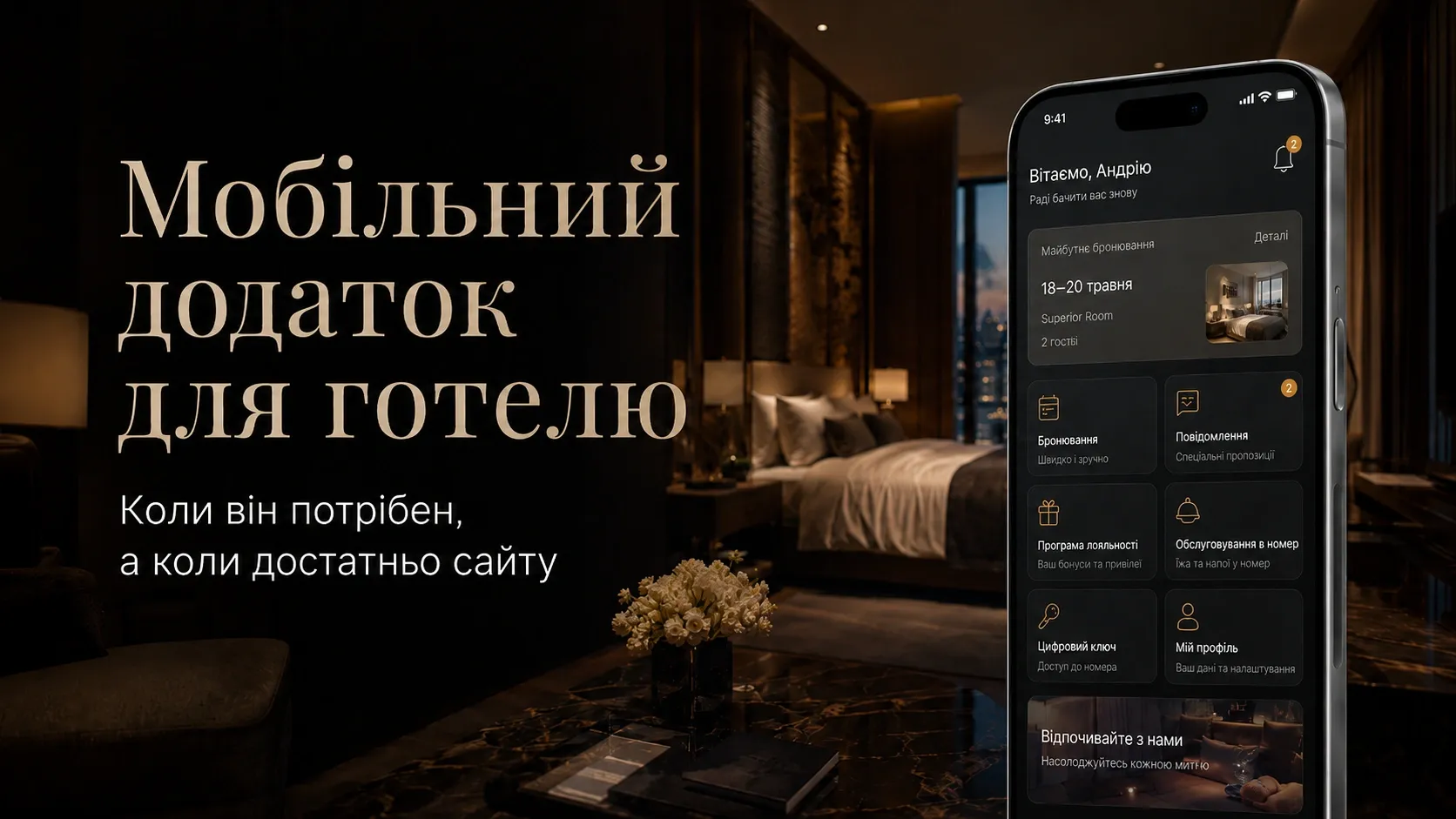
In the hospitality industry, digital tools are becoming a key factor in competitiveness. Hotel owners often face the question: is it worth investing in developing a mobile app, or is a modern website with a guest account sufficient? The answer depends on the business model, target audience, and level of service automation.
This article covers:
- Which mobile app features genuinely increase guest loyalty and repeat bookings.
- When a website, Telegram Mini App, or guest account on a web platform is sufficient.
- Criteria for the feasibility of app development for different types of hotel properties.
- How to integrate booking, push notifications, room service, and loyalty programs into a unified ecosystem.
When a Mobile App for Hotels Actually Works
A mobile app becomes a justified investment if your hotel meets at least two of the following criteria:
- High frequency of repeat bookings — guests return several times a year (business centers, family resorts, long-term stay aparthotels).
- Expanded services — offering room service, spa, transfers, excursions, or car rentals directly through the app.
- Loyalty program — awarding bonuses, discounts, or exclusive offers to regular guests.
- High average spend — the average bill per guest exceeds $200.
- High guest volume — from 10,000 check-ins per year.
- Premium segment — the hotel is positioned as luxury or upper-upscale.
- Geographic location — guests come from different countries and need quick access to services without language barriers.
If your hotel doesn’t meet these criteria, it’s better to start with a website featuring a guest account or a Telegram Mini App. This allows you to test demand for digital services without significant investment.
Key Features of a Mobile App for Hotels
1. Room Booking and Additional Services
A flexible booking system is the foundation of any hotel app. Guests should be able to:
- View real-time room availability with a price calendar.
- Choose a room type with photos and detailed descriptions.
- Add excursions, transfers, spa treatments, or car rentals to their booking.
- Pay online with support for multiple payment systems.
- Receive booking confirmation and an electronic voucher.
Practical example: The app can implement dynamic pricing — rates change based on occupancy, day of the week, or season. This helps maximize revenue and reduce the number of vacant rooms.
2. Push Notifications to Boost Loyalty
Push notifications are a powerful tool for communicating with guests before, during, and after their stay. Effective use cases:
- Before check-in: Reminders about booking 48 hours in advance, offers for room upgrades or additional services.
- During the stay: Information about restaurant promotions, spa deals, or excursions, reminders about check-out time.
- After check-out: Thank-you messages, offers to leave a review, or bonuses for the next booking.
Important: Don’t overuse notifications — 2-3 pushes throughout the guest interaction cycle are enough to avoid irritation.
3. Loyalty Program and Personalization
A loyalty program in a mobile app allows:
- Awarding bonuses for each booking and stay.
- Offering discounts or exclusive deals to regular guests.
- Creating personalized offers based on booking history.
- Collecting data on guest preferences for future tailored offers.
Example: If a guest frequently books rooms with a sea view, the app can offer similar rooms at a discounted rate during their next booking.
4. Room Service and Additional Services
A mobile app allows guests to order services directly from their smartphones:
- Room service: Ordering food and drinks to the room with a menu and the option to choose delivery time.
- Additional services: Booking a table at the restaurant, scheduling spa treatments, ordering a taxi.
- Excursions and activities: Booking excursions, renting bicycles or cars.
Advantage for the hotel: Automating orders reduces the load on reception and minimizes errors in processing requests.
5. Digital Key and Contactless Check-In
A digital key allows guests to open their room using their smartphone, bypassing reception. This is convenient for:
- Quick check-in without queues.
- Guests arriving late at night.
- Business travelers who value time.
Technical requirements:
- Integration with electronic lock systems (e.g., Salto, Assa Abloy).
- Data encryption for security.
- Ability to generate a time-limited key.
6. Guest Account
A guest account in the mobile app is a personalized space where users can:
- View booking history and invoices.
- Save payment card details for quick booking.
- Set personal preferences (pillow type, room temperature).
- Leave reviews and rate services.
- Receive personalized offers.
Example: If a guest always books rooms with air conditioning, the system can automatically offer similar rooms during their next booking.
When a Website or Telegram Mini App Is Enough
A mobile app isn’t a universal solution. For many hotels, it’s sufficient to have:
- A modern website with a responsive design — provides basic booking functionality, online payment, and service information.
- A guest account on the website — allows viewing booking history, storing personal data, and receiving offers.
- Telegram Mini App — a lightweight way to offer booking, room service, and communication without requiring a separate app installation.
When to choose a website or Mini App:
- The hotel has a limited budget for development and support.
- The number of repeat bookings is low.
- The main guest flow consists of tourists who visit once a year.
- The hotel doesn’t offer expanded services (spa, excursions, car rentals).
Criteria for the Feasibility of Developing a Mobile App
| Criteria | Mobile App Feasible | Website/Telegram Mini App Sufficient |
|---|---|---|
| Frequency of repeat bookings | High (3+ times per year) | Low (once per year) |
| Average spend | From $200 | Up to $150 |
| Number of check-ins per year | From 10,000 | Up to 5,000 |
| Hotel segment | Premium, upper-upscale | Economy, mid-scale |
| Loyalty program | Yes | No |
| Expanded services (spa, excursions) | Yes | No |
| Guest geography | International | Local |
How to Integrate a Mobile App with Existing Infrastructure
A mobile app for hotels doesn’t work in isolation. For maximum efficiency, it needs to be integrated with:
- Property Management System (PMS) — synchronization of booking, guest, and room data.
- CRM system — collecting guest data, interaction history, and personalizing offers.
- Payment systems — online payment for bookings and services.
- Electronic lock system — for digital key functionality.
- Service management system (spa, restaurant) — booking additional services.
- Analytics tools — tracking guest behavior and marketing campaign effectiveness.
Integration example: A guest books a room through the app → data is sent to the PMS → reception sees the booking → CRM records contact details and guest history → the electronic lock system generates a digital key → the guest receives a push notification with instructions.
Conclusion: Is It Worth Investing in a Mobile App for Your Hotel?
A mobile app for hotels is a tool for increasing loyalty and repeat bookings, but it’s not a universal solution for everyone. Before investing in development, assess:
- Whether your hotel meets the feasibility criteria.
- Which features are genuinely needed by your guests.
- Whether you’re ready to technically support the app and update its content.
If in doubt, start with a website featuring a guest account or a Telegram Mini App. This will allow you to test audience needs and understand whether a full-fledged mobile app is worth developing.
For hotels ready for digital transformation, a mobile app becomes a powerful tool for increasing revenue, optimizing processes, and creating an unforgettable guest experience.
Need a mobile app or digital solution for your hotel?
SwiftyFlux will help determine the optimal set of features to increase loyalty and repeat bookings. We’ll develop a mobile app, integrate it with CRM and PMS, or create a Telegram Mini App — depending on your needs.
FAQ
Is a mobile app necessary for a small hotel?
For small hotels with low guest volume and limited services, a modern website with a guest account or a Telegram Mini App is sufficient. A mobile app is justified for hotels with a high frequency of repeat bookings, expanded services, or a premium segment.
What are the advantages of a digital key in a mobile app?
A digital key allows guests to open their room using their smartphone, bypassing reception. This is convenient for quick check-in, late arrivals, and business travelers. Technically, integration with an electronic lock system is required.
How do push notifications help increase loyalty?
Push notifications allow reminders about bookings, offers for room upgrades, information about promotions, and requests to leave reviews. It’s important not to overuse them — 2-3 notifications throughout the guest interaction cycle are enough.
How to integrate a mobile app with a CRM system?
A mobile app needs to be integrated with a CRM system to collect guest data, booking history, and personalize offers. This allows creating individual proposals based on guest preferences.
Can you do without a mobile app if you have a Telegram Mini App?
A Telegram Mini App can replace a mobile app for hotels with a limited budget or low volume of repeat bookings. It allows implementing booking, room service, and communication with guests without installing a separate app.