
Mobile App for a Beauty Salon: When Is It Needed and When a Website Is Enough
Explore when a mobile app for a beauty salon pays off and when it's better to stick with a responsive website, PWA, or Telegram Mini App. Analyze online booking, push notifications, loyalty programs, and repeat visits.
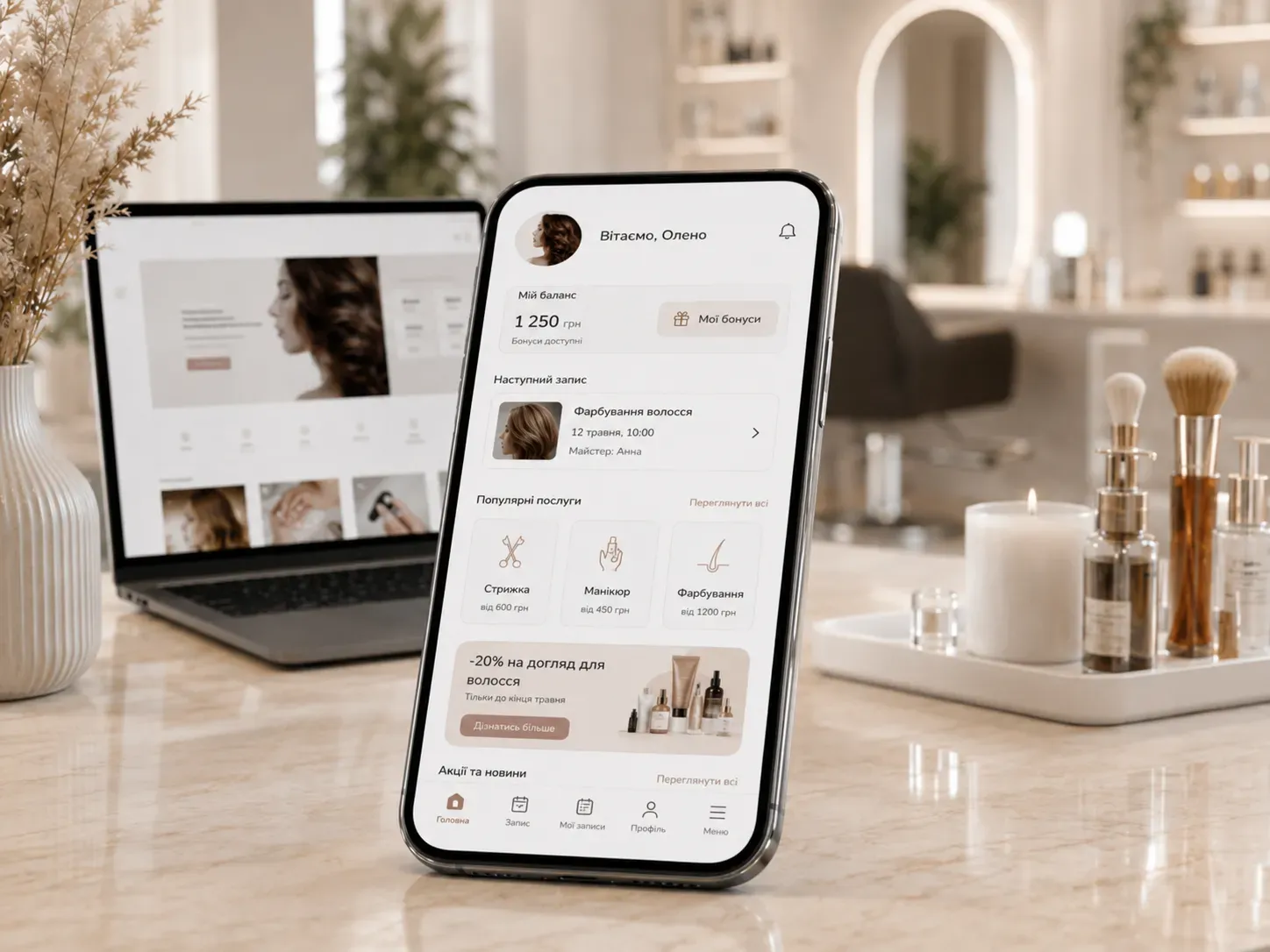
Owners of large beauty salons, chains, and beauty clinics often face a dilemma: should they launch their own mobile app or stick with a website? On one hand, an app looks prestigious and technologically advanced. On the other, its development, maintenance, and promotion require significant investment. In this article, we’ll explore when a mobile app truly enhances client service and revenue, and when a responsive website, PWA, or Telegram Mini App is sufficient.
When a Website Is Enough: Cost Efficiency Without Compromise
For small salons with limited budgets or those just starting their digital transformation, a mobile app is an unnecessary expense. In most cases, a responsive website with online booking, a service catalog, and a basic loyalty program is enough. Let’s examine key scenarios where a website solves all tasks without extra costs:
-
Online booking via the website. Modern CRM systems (e.g., Booksy, Yclients, Planado) integrate easily with a website, allowing clients to book services in just a few clicks. If your audience is used to booking through the website or social media, an app won’t provide significant advantages.
-
Basic loyalty program. Accumulative discounts, bonuses for reviews, or referral programs can be implemented through a personal account on the website. No separate app is needed—just a web application or CRM integration.
-
Push notifications aren’t critical. If clients don’t need instant alerts about promotions or booking reminders, email newsletters or SMS will be more effective than push notifications, which require app installation.
-
No repeat visits. For salons where clients come once (e.g., for wedding hairstyles), an app won’t pay off. However, for beauty businesses with regular clients (manicures, haircuts, cosmetology), an app can increase repeat sales.
Example: A salon with 500 active clients per month can manage with a website featuring online booking and a basic CRM. The costs of developing and maintaining an app (starting at $10,000) won’t pay off if clients don’t use it daily.
When a Mobile App Is Necessary: High LTV and Client Loyalty
A mobile app becomes a justified investment for large salons, chains, and beauty clinics with a steady client base and high LTV (Lifetime Value). Here are key scenarios where an app strengthens the business:
1. Repeat Visits and Loyalty Programs
If your clients visit the salon regularly (e.g., every 3-4 weeks), an app helps:
-
Launch a gamified loyalty program. For example, clients earn points for each visit, which they can exchange for a free service or discount. The app conveniently displays progress, loyalty levels, and personalized offers.
-
Stimulate repeat sales. Push notifications with personalized offers ("You haven’t had a massage in a while!") increase repeat visit conversion by 20-30% (depending on the segment).
-
Collect reviews and ratings. After a visit, the app can automatically prompt clients to leave a review or rate the specialist, boosting trust among new clients.
Example: A salon chain with 5,000 active clients can increase the average check by 15% through a gamified loyalty program in the app.
2. Online Booking and Booking Automation
The app simplifies the booking process for regular clients:
-
Quick access to visit history. Clients see when they last visited the salon, what services they received, and which specialist served them. This makes choosing a service or specialist easier for the next booking.
-
Personalized recommendations. Based on visit history, the app can suggest services the client hasn’t tried yet (e.g., "You might like eyelash lamination").
-
Automatic reminders. Push notifications a day before the visit reduce missed bookings by 30-40%.
Example: A client who regularly visits a cosmetologist can book their next appointment with one click, choosing a convenient time from the specialist’s calendar.
3. Push Notifications and Instant Feedback
Unlike email or SMS, push notifications have a 90% open rate and are delivered instantly. This is critical for:
-
Urgent promotions. For example, "Today, 20% off all manicure services!" or "Only 2 spots left for a massage at 6 PM."
-
Booking reminders. An hour before the visit, the client receives a notification with the option to quickly reschedule or cancel the booking.
-
Personalized offers. Based on visit history, the app can send offers that genuinely interest the client (e.g., "We noticed you haven’t had hair removal in a while").
4. ROI of Investing in an App
Developing a mobile app for a beauty salon costs $10,000 to $50,000 (depending on functionality and platform). For the investment to pay off, you need:
-
At least 1,000 active users per month. If you have fewer clients, the app won’t generate enough repeat sales.
-
High average check. For salons with an average check below $20, the app may not pay off. However, for beauty clinics with an average check of $60+, each repeat visit quickly returns the investment.
-
A motivating loyalty program. If clients don’t see the benefits of using the app (e.g., earning bonuses), they won’t use it.
ROI Formula:
(Number of active users × Average check × Percentage of repeat visits due to the app) — Cost of development and maintenance.
Example: A salon chain with 3,000 active clients, an average check of $50, and 20% repeat visits per month can recoup the app’s cost in 6-12 months.
Alternatives to a Mobile App: What to Choose?
Not every salon needs a full-fledged mobile app. Let’s explore alternatives that can be more cost-effective:
1. Responsive Website with a Personal Account
Advantages:
- Accessible from any device without installation.
- Easier and cheaper to develop and maintain (starting at $2,000).
- Integrates with CRM, payment systems, and loyalty programs.
Disadvantages:
- No push notifications (only email/SMS).
- Less personalized experience compared to an app.
When to choose: For salons with limited budgets or those just starting their digital transformation.
2. Progressive Web App (PWA)
What is it? A web app that works like a mobile application but doesn’t require installation from the App Store or Google Play.
Advantages:
- Works offline and loads faster than a regular website.
- Can be added to the home screen as an icon.
- Cheaper to develop and maintain (starting at $5,000).
- Supports push notifications.
Disadvantages:
- Limited access to device hardware (e.g., camera or GPS).
- Less visibility in app stores.
When to choose: For salons that want to combine the benefits of a website and an app without high costs.
3. Telegram Mini App
What is it? A mini-app within Telegram that doesn’t require installing a separate application.
Advantages:
- No need to develop separate apps for iOS and Android.
- Integrates with a Telegram bot for reminders and notifications.
- Cheaper to develop (starting at $3,000).
- Easy to scale for salon chains.
Disadvantages:
- Requires clients to have Telegram.
- Limited functionality compared to a full-fledged app.
When to choose: For salons whose audience actively uses Telegram (e.g., younger clients).
Comparison Table: Website, PWA, Telegram Mini App, or Mobile App?
| Criteria | Responsive Website | PWA | Telegram Mini App | Mobile App |
|---|---|---|---|---|
| Development Cost | From $2,000 | From $5,000 | From $3,000 | From $10,000 |
| Push Notifications | No | Yes | Yes (via bot) | Yes |
| Installation | Not required | Can be added to screen | Not required | Required |
| Offline Mode | No | Yes | Limited | Yes |
| CRM Integration | Yes | Yes | Yes | Yes |
| Loyalty Program | Yes | Yes | Yes | Yes |
| Online Booking | Yes | Yes | Yes | Yes |
| Repeat Visits | Basic | Increased | Increased | High |
| ROI for Small Business | High | Medium | Medium | Low |
| ROI for Large Business | Medium | High | High | Highest |
Conclusion: How to Make the Right Decision?
To determine whether your salon needs a mobile app, answer these questions:
- How many active clients do you have per month? If fewer than 1,000, the app won’t pay off.
- What’s your average check? For checks below $20, the app may not be cost-effective.
- Do you have a loyalty program that encourages clients to return? Without one, the app won’t drive repeat sales.
- Do you need push notifications for instant client alerts? If yes, consider PWA or a mobile app.
- Are your clients willing to install an app? If not, start with Telegram Mini App or PWA.
When to choose a mobile app:
- You have a large client base (1,000+ active users per month).
- The average check is high (from $40).
- You want to launch a gamified loyalty program.
- Push notifications are critical for your business.
When to stick with a website, PWA, or Telegram Mini App:
- You have a small client base or low average check.
- You’re just starting digital transformation and want to test the market.
- Your budget is limited, and you’re looking for a cost-effective alternative.
Practical Steps to Launch a Mobile App
If you’ve decided that a mobile app is right for your salon, follow these steps:
-
Define key features. Online booking, personal account, loyalty program, and push notifications are the minimum. Additional features can include a chat with the administrator, a service catalog with filters, and online payments.
-
Choose a technology stack. For iOS — Swift, for Android — Kotlin. If the budget is limited, consider cross-platform solutions (Flutter, React Native).
-
Integrate with CRM and payment systems. The app should sync with your CRM (e.g., Yclients, Planado) and support online payments (LiqPay, WayForPay).
-
Develop UX/UI design. The interface should be intuitive so clients don’t struggle with booking or viewing visit history.
-
Test and launch. Conduct beta testing with a group of regular clients, gather feedback, and fix errors before the full launch.
-
Promote the app. Use email newsletters, SMS, social media, and internal promotions ("Install the app and get a discount on your next visit").
-
Analyze and optimize. Track metrics: number of active users, repeat visits, push notification conversion. Optimize the loyalty program and communications based on the data.
Final Thoughts
A mobile app for a beauty salon isn’t just a status symbol—it’s a tool for increasing client loyalty and repeat sales. However, launching one is only justified for large salons, chains, and beauty clinics with a steady client base and high average check. For other businesses, a responsive website, PWA, or Telegram Mini App is sufficient.
Before investing in app development, analyze your audience, average check, loyalty program, and need for push notifications. If in doubt, start with more cost-effective alternatives and test the market. In any case, digitizing client service is a step toward increasing revenue and competitiveness for your business.
Need a mobile app for your salon?
Developing a mobile app for a beauty salon is an investment in client loyalty and repeat sales. SwiftyFlux will help create an app with online booking, push notifications, and a loyalty program that pays off by increasing repeat client visits.
FAQ
How much does it cost to develop a mobile app for a beauty salon?
The cost of developing a mobile app for a beauty salon depends on functionality and platform. For separate iOS and Android apps, the price starts at $10,000. Cross-platform solutions (Flutter, React Native) may cost less—starting at $8,000. Additional expenses include design, CRM integration, payment systems, and ongoing support.
What are the advantages of a mobile app over a website?
A mobile app provides a better user experience with push notifications, quick access to a personal account, gamified loyalty programs, and personalized offers. The app also increases repeat visits by sending instant alerts and simplifying booking.
Can I manage without a mobile app if I have a website?
Yes, for many salons, a responsive website with online booking and a basic loyalty program is sufficient. A mobile app is justified only for large salons, chains, and beauty clinics with a steady client base and high average check.
What is PWA, and is it suitable for a beauty salon?
PWA (Progressive Web App) is a web app that works like a mobile application but doesn’t require installation from the App Store or Google Play. PWA supports push notifications, works offline, and is cheaper to develop than a full-fledged app. It’s suitable for salons that want to combine the benefits of a website and an app without high costs.
How does a mobile app increase client loyalty?
A mobile app allows launching a gamified loyalty program where clients earn points for each visit and can exchange them for discounts or free services. The app also sends personalized push notifications with offers and reminders, encouraging repeat visits.
How quickly will a mobile app pay off for a salon?
The ROI of a mobile app depends on the number of active users, average check, and percentage of repeat visits. For salons with 1,000+ active clients per month and an average check of $40+, the app can pay off in 6-12 months due to increased repeat sales.