
ERP for Fitness Club Chains: Branches, Finances, Staff, Inventory, and Analytics
How to centralize management of a fitness club chain with a single ERP system: roles, pricing, cross-club memberships, trainer salaries, equipment inventory, branch P&L, and CRM integrations.
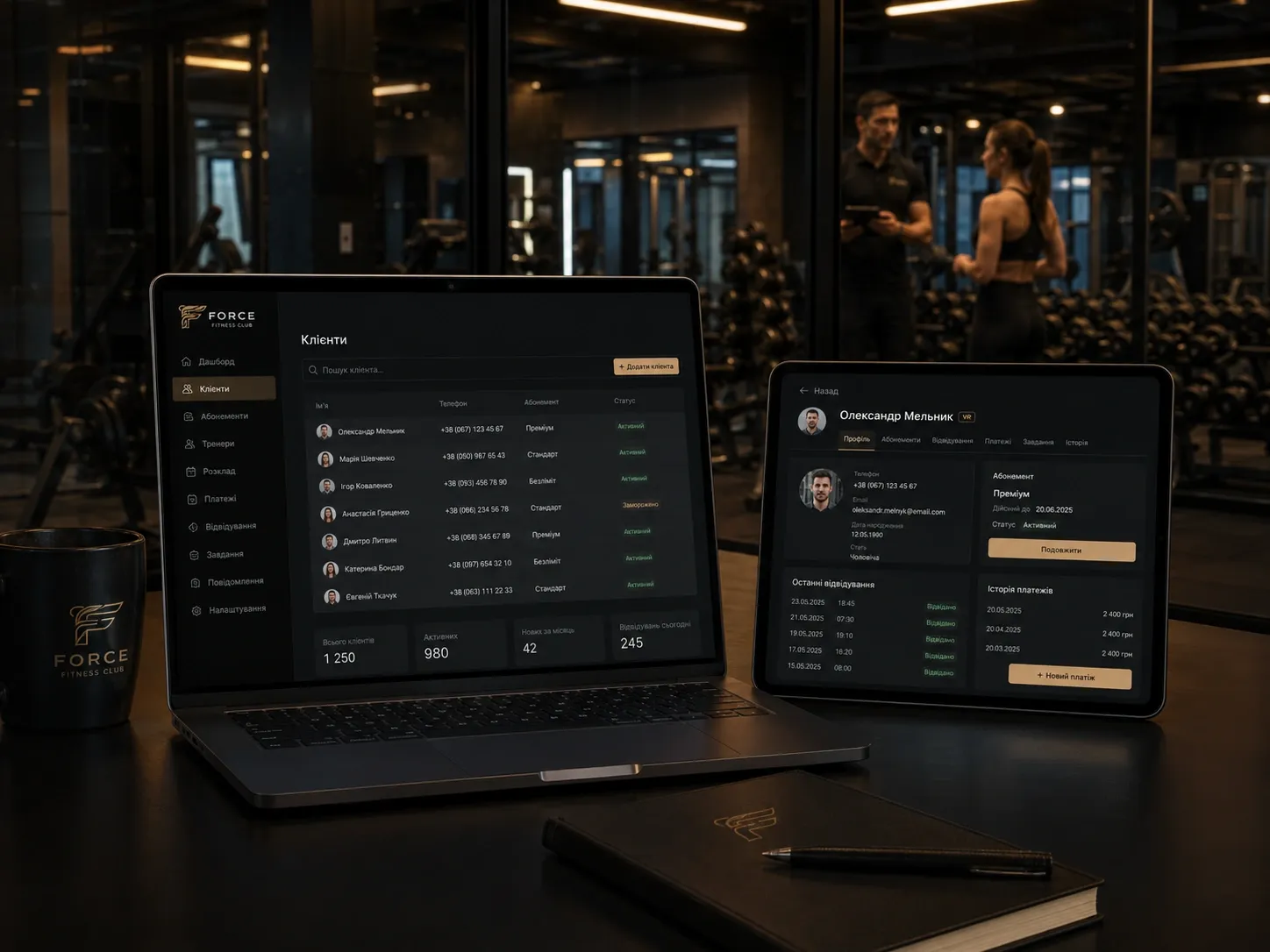
Managing a chain of fitness clubs is a constant balancing act between control and flexibility. Each branch has its own nuances: varying client traffic, rental costs, trainer efficiency, and equipment wear levels. Without a centralized system, data scatters across Excel files, chats, and paper logs, while decisions are made blindly. The result? Lost revenue due to inefficient resource use, uncontrolled purchases, payroll errors, and an inability to compare the real profitability of branches.
An ERP (Enterprise Resource Planning) system for a fitness club chain isn’t just accounting software—it’s a unified platform that integrates all business processes: from membership sales to P&L analytics for each branch. This article explains how ERP helps automate routine tasks, avoid financial losses, and scale your network without chaos.
Why CRM Isn’t Enough: Key Differences Between CRM and ERP
Many chain owners start with CRM (Customer Relationship Management) systems, which focus on client interactions: sales, booking workouts, and visit history. CRM is a tool for sales and marketing teams, but it doesn’t address the operational management needs of a network.
Key Differences Between ERP and CRM:
| Parameter | CRM | ERP |
|---|---|---|
| Focus | Customers and sales | All business processes: finances, staff, inventory, branches |
| Users | Managers, marketers | Owners, financial teams, branch managers, HR, logistics |
| Data | Client history, sales | Unified database: contracts, payroll, purchases, equipment, financial reports |
| Analytics | Sales conversion, attendance | Branch P&L, equipment ROI, staff efficiency |
| Integrations | Payment systems, email campaigns | Accounting, inventory, HR systems, payment gateways, BI tools |
For a fitness club chain, CRM is necessary but insufficient. For example, CRM can show how many clients visited a gym in Kyiv, but it won’t answer:
- Why does the Odesa branch generate less profit with the same number of clients?
- How much does equipment maintenance cost in each branch?
- Which trainer generates the most repeat sales, and how should their workload be distributed?
- Is opening a new branch profitable given the current ROI?
An ERP system provides answers to these questions by consolidating data from all departments into a single database.
Centralized Database: How ERP Eliminates Chaos in Branch Management
The main challenge for fitness club chains is fragmented data. Each branch maintains its own records in separate spreadsheets, financial teams manually compile reports, and procurement departments lack visibility into equipment needs across locations. An ERP system creates a single source of truth for all teams.
1. Branch Management: Comparing Efficiency and Controlling Costs
Each branch has unique financial metrics: revenue from memberships, rent, utilities, staff salaries, and equipment depreciation. ERP enables:
- Creating individual branch profiles with the ability to compare KPIs (e.g., cost per square meter, average ticket, visits per trainer).
- Automating P&L (Profit & Loss) reports for each branch to reveal true profitability.
- Controlling branch budgets: The system alerts if expenses exceed planned limits.
- Setting different pricing and promotions for each branch based on local factors (e.g., student discounts near universities).
Example: If the Kharkiv branch has a lower average ticket than Lviv, ERP helps determine the cause: low attendance, inefficient staff, or high rent.
2. Cross-Club Memberships: Flexibility for Clients, Control for the Network
Clients of fitness club chains often want to visit different branches—for example, training downtown on weekdays and in the suburbs on weekends. An ERP system allows:
- Creating unified memberships with access to all branches or selected gyms.
- Setting visit limits per branch (e.g., no more than 3 visits per week).
- Automatically distributing revenue between branches based on actual membership usage.
- Tracking client movement between branches to optimize schedules.
Example: If a client buys a 12-visit membership and uses 8 in Branch #1 and 4 in Branch #3, the system automatically allocates revenue between them.
3. Staff Management: Salaries, Schedules, and Trainer Efficiency
Staff is one of the largest cost items in a fitness club. ERP helps:
- Automating payroll calculations with bonuses for membership sales, training attendance, and other KPIs.
- Creating flexible work schedules for trainers and administrators based on peak hours in each branch.
- Tracking staff efficiency: Which trainers drive repeat sales, and who has the highest client attendance rates.
- Managing employee access to data (e.g., trainers see only their clients, while branch managers see financial reports for their location).
Example: If a trainer in Branch #2 has the highest repeat sales rate, the system helps identify what makes them successful: personal approach, specialization in certain workouts, or flexible scheduling.
4. Inventory and Equipment: Cost Control and Theft Prevention
Fitness club equipment is expensive and requires regular maintenance. ERP enables:
- Tracking equipment in each branch: purchase date, cost, depreciation period, maintenance schedule.
- Controlling equipment movement between branches to prevent losses.
- Automating procurement of consumables (e.g., disposable towels, cleaning supplies) based on actual usage.
- Monitoring equipment wear and planning replacements to avoid downtime.
- Analyzing equipment ROI: Which machines are used most often, and which are just taking up space.
Example: If cardio machines in Branch #3 wear out faster than in others, the system helps identify the cause: high usage or insufficient maintenance.
5. Financial Accounting and Analytics: Branch P&L and Decision-Making
Without centralized analytics, it’s hard to determine which branches are profitable and which are loss-making. ERP provides:
- Detailed P&L reports for each branch: revenue from memberships, additional services (e.g., personal training), rent, salaries, utilities, and equipment depreciation.
- Comparative analytics across branches for key metrics: profitability, attendance, average ticket.
- Financial forecasting based on historical data.
- Integration with accounting systems for automatic tax report generation.
Example: If Branch #4 has high rent costs but low attendance, ERP helps decide whether to renew the lease or relocate the gym.
How to Choose an ERP for a Fitness Club Chain: Practical Criteria
Not every ERP system is suitable for managing a fitness club chain. Here are key selection criteria:
-
Scalability
- The system should support an unlimited number of branches, users, and data.
- Ability to add new modules (e.g., integration with payment systems or BI tools) without overhauling the entire system.
-
Flexible Roles and Access
- Ability to configure access rights for different employee categories (e.g., branch managers see only their data, while network owners see all financial reports).
- Support for cross-club memberships and flexible pricing.
-
Integrations with Other Systems
- CRM (for client management), accounting software (e.g., 1C), payment gateways (WayForPay, Fondy), BI tools (Power BI, Tableau).
- API for custom integrations (e.g., with a client mobile app).
-
Analytics and Reporting
- Ready-made report templates for branch P&L, staff efficiency, and equipment ROI.
- Ability to create custom reports without developer involvement.
-
Mobile Support
- Mobile app for managers and staff to manage the network from anywhere.
- Ability to view reports and approve procurement requests via smartphone.
-
Data Security
- Data encryption, regular backups, protection against unauthorized access.
- Compliance with GDPR requirements (if working with EU clients).
How to Implement ERP: A Step-by-Step Plan
Implementing ERP isn’t a one-time project—it’s a process that requires planning and involvement from key employees. Here’s a step-by-step plan:
-
Define Goals and Requirements
- Which business processes need automation first? (e.g., branch management, trainer payroll, inventory tracking.)
- Which reports are essential for decision-making? (Branch P&L, attendance analytics, equipment ROI.)
-
Choose an ERP Provider
- Look for experience working with fitness club chains.
- Request a demo and test key scenarios (e.g., selling a cross-club membership, calculating trainer payroll).
-
Customize the System for Your Business Processes
- Create branch profiles, configure roles and access rights.
- Migrate data from existing systems (CRM, Excel, accounting).
- Integrate ERP with payment systems, accounting, and other tools.
-
Train Employees
- Conduct training for key users (finance teams, branch managers, HR).
- Create guides and FAQs for quick issue resolution.
-
Launch a Pilot Project
- Implement ERP in one branch or department (e.g., finance).
- Test the system in real-world conditions and fix errors.
-
Scale Across the Network
- Gradually roll out ERP to all branches and departments.
- Regularly analyze data and optimize business processes.
Conclusion: ERP as the Foundation for Scaling Your Network
Managing a fitness club chain without ERP is like running a fleet without GPS: you know the cars are moving, but you can’t see their location, speed, or fuel consumption. ERP consolidates all processes into a single database, enabling:
- Controlling finances for each branch and making data-driven decisions.
- Optimizing staff performance by identifying the most effective trainers and administrators.
- Avoiding losses in procurement and inventory by automating equipment tracking.
- Offering flexible memberships to increase client loyalty and network revenue.
- Scaling your business without losing control over branches.
If you’re still using multiple disjointed programs and Excel files to manage your network, it’s time to switch to ERP. This isn’t just an investment in software—it’s a step toward transparency, efficiency, and growth for your business.
Want to learn how ERP can solve your specific challenges? We’ll help you choose a solution tailored to your network’s needs.
Need an ERP system to unite your network?
We develop custom ERP solutions for fitness club chains: branch management, finances, staff, inventory, and analytics in one system. Leave a request, and we’ll find the right solution for your needs.
FAQ
How does ERP differ from CRM for a fitness club?
CRM focuses on client interactions: membership sales, workout bookings, and marketing. ERP integrates all business processes: branch finances, staff payroll, equipment inventory, and P&L analytics. For a fitness club chain, CRM is a tool for sales teams, while ERP is for owners and financial directors.
What are the benefits of cross-club memberships in ERP?
ERP allows creating unified memberships with access to all branches or selected gyms, setting visit limits, automatically distributing revenue between branches, and tracking client movement. This increases client loyalty and simplifies revenue management for the network.
How does ERP help control equipment costs?
ERP tracks equipment in each branch: cost, depreciation period, and maintenance schedule. The system alerts when repairs or replacements are needed, analyzes equipment ROI, and controls movement between branches.
Can ERP integrate with accounting software?
Yes, most ERP systems support integration with accounting software (e.g., 1C). This enables automatic tax report generation, payroll calculations, and financial reporting without data duplication.
How long does it take to implement ERP for a fitness club chain?
Timelines depend on the number of branches, business process complexity, and the chosen ERP system. On average, implementation takes 3 to 6 months: from system setup to employee training and full deployment.
How does ERP help compare branch efficiency?
ERP automatically generates P&L reports for each branch: revenue from memberships and additional services, rent, salaries, utilities, and equipment depreciation. The system allows comparing branches by key metrics: profitability, attendance, and average ticket.