
E-commerce for Hotels: Selling Gift Certificates, Packages, SPA, and Additional Services Online
How to launch an online store for your hotel to sell gift certificates, vacation packages, SPA services, restaurant bookings, and activities. Practical steps, online payments, CRM, and repeat sales.
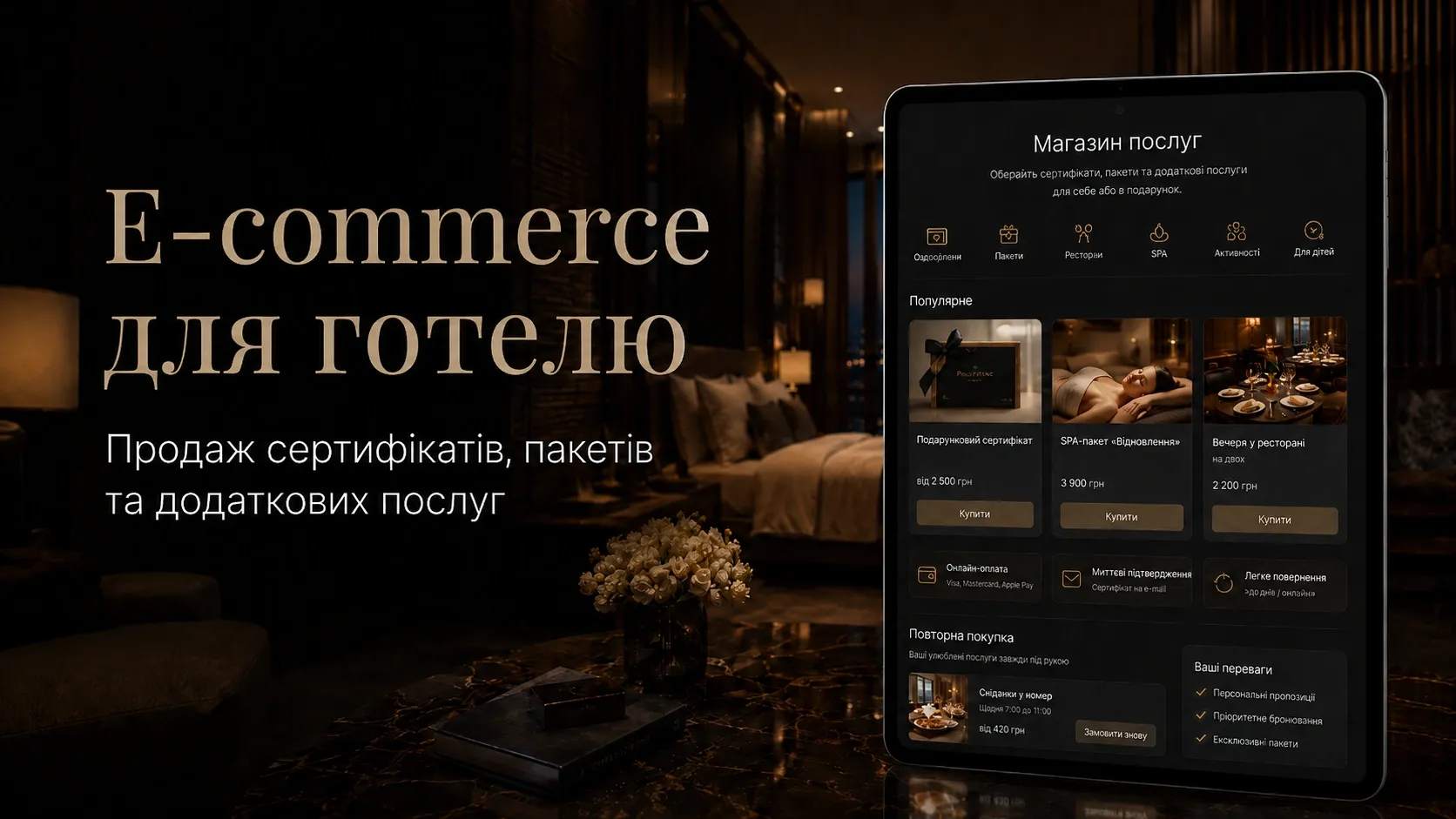
Hotel business isn’t limited to room bookings. You can sell gift certificates for getaways, SPA packages, romantic dinners at your restaurant, excursions, and other services — all through online channels. This not only increases the average check but also creates an additional stream of returning customers who come back for new experiences.
This article explains how to launch e-commerce for your hotel to sell certificates, packages, services, and activities online, integrate online payments, automate electronic receipts, and use CRM for repeat sales.
Why Hotels Need an Online Store for Services
The traditional hotel business model relies on room bookings through a website or aggregators. But guests often look for more than just a place to stay — they want a full experience: spa treatments, romantic dinners, active recreation, or even corporate events. If you don’t offer these services online, you’re missing out on potential revenue.
Key Benefits of E-commerce for Hotels:
- Increased average check: Guests buy not just rooms but additional services.
- Repeat sales: After staying at the hotel, guests may return for new services.
- Gift certificates: An ideal way to attract new customers who come with friends or family.
- Online payments and electronic receipts: Automation reduces administrative workload and speeds up the sales process.
- CRM integration: You see the full purchase history of each guest and can offer personalized deals.
Which Hotel Services Can Be Sold Online
Don’t limit yourself to room bookings. Here’s a list of services you can implement through an online store:
1. Gift Certificates
A gift certificate is a universal gift for any occasion. You can offer:
- Fixed amounts (e.g., $50, $100, $200).
- Certificates for specific services (e.g., "Spa Day for Two" or "Romantic Dinner").
- Personalized certificates with the recipient’s name and a greeting.
Example: A guest buys a $100 certificate and gifts it for a birthday. The recipient can use it for any hotel service: spa, restaurant, excursion, or even a room booking.
2. Package Deals (Bundles)
Package deals combine services at a discounted price. For example:
- "Weekend for Two" (2-night room + breakfast + spa treatment + romantic dinner).
- "Spa Day" (1-day room + 3 spa treatments + lunch at the restaurant).
- "Active Recreation" (2-night room + bike tour + massage).
Advantages of packages:
- Guests get a discount compared to buying services separately.
- You sell more services at once.
- Convenient for corporate clients (e.g., "Corporate Retreat" package for teams).
3. SPA Services
If your hotel has a spa, you can sell:
- Individual treatments (massage, wraps, hydrotherapy).
- Subscriptions (e.g., 5 massages for the price of 4).
- Spa gift certificates.
- Spa packages (e.g., "Detox Day" with multiple treatments).
Example: A guest books a room and returns a week later to buy a spa package for themselves and a friend.
4. Restaurant and Banquet Services
The hotel restaurant isn’t just an additional revenue stream — it’s an opportunity to sell:
- Online table reservations.
- Special menus (e.g., "Romantic Dinner for Two").
- Banquet offers (weddings, corporate events, children’s parties).
- Catering (off-site service).
Example: A couple books a room and immediately orders a romantic dinner at the restaurant through the online store.
5. Activities and Excursions
If your hotel is located in a scenic area, you can offer:
- Excursions (hiking, biking, car tours).
- Sports activities (horseback riding, boat rides, ATV tours).
- Workshops (cooking, ceramics, wine tasting).
- Children’s entertainment (animation, playrooms).
Example: A family books a room and immediately orders a nature excursion and a pottery workshop.
6. Additional Services
Even small services can generate extra income:
- Laundry and ironing.
- Transfers (airport pickup, excursion transport).
- Equipment rental (bikes, skis, tennis rackets).
- Concierge services (ticket booking, restaurant reservations in the city).
Example: A guest books a room and immediately orders an airport transfer and bike rentals.
How to Launch E-commerce for Your Hotel: Step-by-Step Guide
1. Choose an E-commerce Platform
You can:
- Add an e-commerce module to your existing website (if you already have a corporate site).
- Create a separate online store for selling services.
Criteria for choosing a platform:
| Criteria | Importance | Explanation |
|---|---|---|
| CRM integration | High | To automatically transfer guest and purchase data to CRM. |
| Online payments | High | Support for payment systems (Stripe, PayPal, local providers). |
| Electronic receipts | High | Automatic receipt issuance as per legal requirements. |
| Custom logic | Medium | Ability to configure complex service packages, discounts, promo codes. |
| UX/UI | High | User-friendly interface, mobile-responsive design. |
| Analytics | Medium | Sales reports, conversion tracking, popular services. |
2. Create a Service Catalog
Organize services into clear categories. For example:
- Gift Certificates
- Package Deals
- SPA Services
- Restaurant
- Activities and Excursions
- Additional Services
Tips for the catalog:
- Add high-quality photos and detailed descriptions.
- Specify the duration of the service (e.g., "Massage — 60 min").
- Allow date and time selection (if applicable).
- Add customer reviews to build trust.
3. Set Up Online Payments and Electronic Receipts
Guests should be able to pay for services online. To do this:
- Connect payment systems (Stripe, PayPal, local providers like LiqPay or WayForPay).
- Set up automatic electronic receipt issuance (as per legal requirements).
- Offer multiple payment options (credit card, Apple Pay/Google Pay).
Benefits of online payments:
- Reduces administrative workload.
- Guests receive purchase confirmation immediately.
- Lowers the risk of no-shows (since the service is prepaid).
4. Integrate CRM for Repeat Sales
CRM helps:
- Store guest purchase histories.
- Segment guests by interests (e.g., spa lovers, active recreation enthusiasts).
- Send personalized offers (e.g., a spa package discount after booking a room).
- Automate communication (emails, SMS, messenger notifications).
Example of CRM in action:
- A guest books a room → CRM records the purchase.
- A week later, the guest receives an email: "You booked a room at our hotel. Would you like to book a spa treatment with a 10% discount?"
- The guest returns and buys a spa package.
5. Automate Processes
Automation reduces staff workload and minimizes errors. For example:
- Automatic booking confirmation after payment.
- Reminders about bookings (SMS or email) a day before the service.
- Automatic electronic receipt generation after payment.
- Calendar synchronization to avoid double bookings.
Example of automation:
- A guest buys a spa package → the system automatically books the treatments in the spa calendar.
- A day before the treatment, the guest receives an SMS reminder.
6. Launch Marketing Tools
To attract guests to your online store, use:
- Promo codes and discounts (e.g., "15% off your first purchase").
- Loyalty programs (earn points for purchases).
- Email marketing (newsletters, special offers).
- SEO optimization (so guests can find your online store via Google).
- Contextual advertising (targeted ads in Google Ads or Facebook).
Example of a marketing campaign:
- Launch a promotion: "Buy a $100 gift certificate and get 10% off your next purchase."
- Send the offer via email to guests who previously booked rooms.
How to Increase Repeat Sales Through E-commerce
Repeat sales are key to stable revenue. Here’s how to encourage them:
1. Offer Personalized Recommendations
Use CRM data to suggest services that interest guests. For example:
- If a guest previously booked spa treatments, offer them a new spa package.
- If a guest booked a room with kids, suggest children’s activities.
2. Create Loyalty Programs
For example:
- Points system: Guests earn points for each purchase, redeemable for discounts.
- Referral bonuses: Guests get a discount if their friend makes a purchase via their link.
- Subscriptions: For example, "10 spa treatments for the price of 8."
3. Use Email Marketing
Send guests:
- Birthday greetings with a special offer.
- Personalized recommendations based on purchase history.
- News and promotions.
Example email:
"Happy Birthday! We’ve prepared a special offer for you: a spa package with a 20% discount. Valid until the end of the month."
4. Collect Reviews and Improve Services
Guest reviews are social proof that builds trust in your online store. Ask guests to leave reviews after their purchase and use them in your marketing.
How to collect reviews:
- Send an email requesting a review after the service.
- Offer a small reward for reviews (e.g., a discount on the next purchase).
- Display reviews on your website and social media.
Conclusion
E-commerce for hotels isn’t just a tool for selling rooms — it’s an opportunity to earn from additional services, gift certificates, vacation packages, and repeat sales. By launching an online store with online payments, CRM, and automation, you can:
- Increase the average guest check.
- Attract new guests through gift certificates.
- Encourage repeat sales with personalized offers.
- Reduce staff workload through automation.
The key is to create a user-friendly interface for guests and ensure CRM integration for effective sales management.
Start small: add the ability to buy gift certificates or spa packages to your website. Gradually expand your service offerings and optimize processes. This way, you can turn your hotel into a full-fledged recreation and entertainment center that generates stable revenue not just from room bookings but from additional services as well.
Want to launch e-commerce for your hotel?
We’ll help you create a high-conversion online store for selling gift certificates, packages, SPA services, and other additional services. CRM integration, online payments, and process automation — everything to grow your revenue.
FAQ
Can hotel services be sold online without an online store?
Yes, but it will be less convenient for guests and more complex for you. You can accept orders via messengers or email, but this requires more manual work and doesn’t provide process automation. An online store allows guests to independently choose services, pay for them online, and receive electronic receipts without involving an administrator.
Which payment systems are best for online payments in hotels?
Choose payment systems popular among your target audience. For international guests, Stripe or PayPal work well. Locally, consider providers like LiqPay, WayForPay, or Portmone. Ensure the system supports automatic electronic receipt issuance and has low transaction fees.
How does CRM help increase repeat sales in hotels?
CRM stores guest purchase histories and allows segmentation by interests. You can send personalized offers (e.g., a spa package for those who previously booked spa treatments), automate communication, and track the effectiveness of marketing campaigns.
Which services are best to sell online in hotels?
The most popular are gift certificates, spa packages, romantic dinners at the restaurant, and excursions. Package deals (e.g., "Weekend for Two" with a room, breakfast, and spa treatment) also sell well. Start with services that are already in demand among your guests.
Should the online store be integrated with the hotel booking system?
Yes, integration with the hotel booking system (e.g., Cloudbeds, HotelTime) helps avoid double bookings and syncs guest data. This is especially important if you sell packages that include room bookings.
How to attract guests to the hotel’s online store?
Use marketing tools: promo codes, loyalty programs, email campaigns, and contextual advertising. Also, place links to the online store on your hotel’s website, social media, and in guest newsletters.